August 17, 2026 · 2 min read
MNQ Trade Breakdown: From SMT to Buy-Side Liquidity
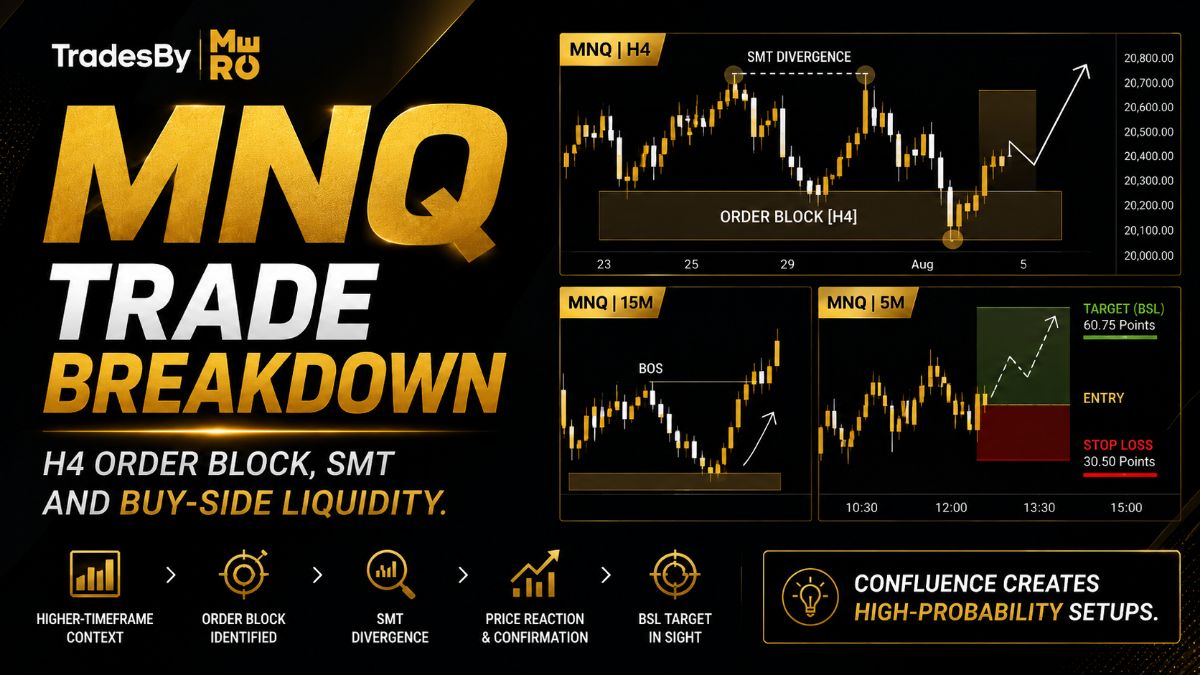
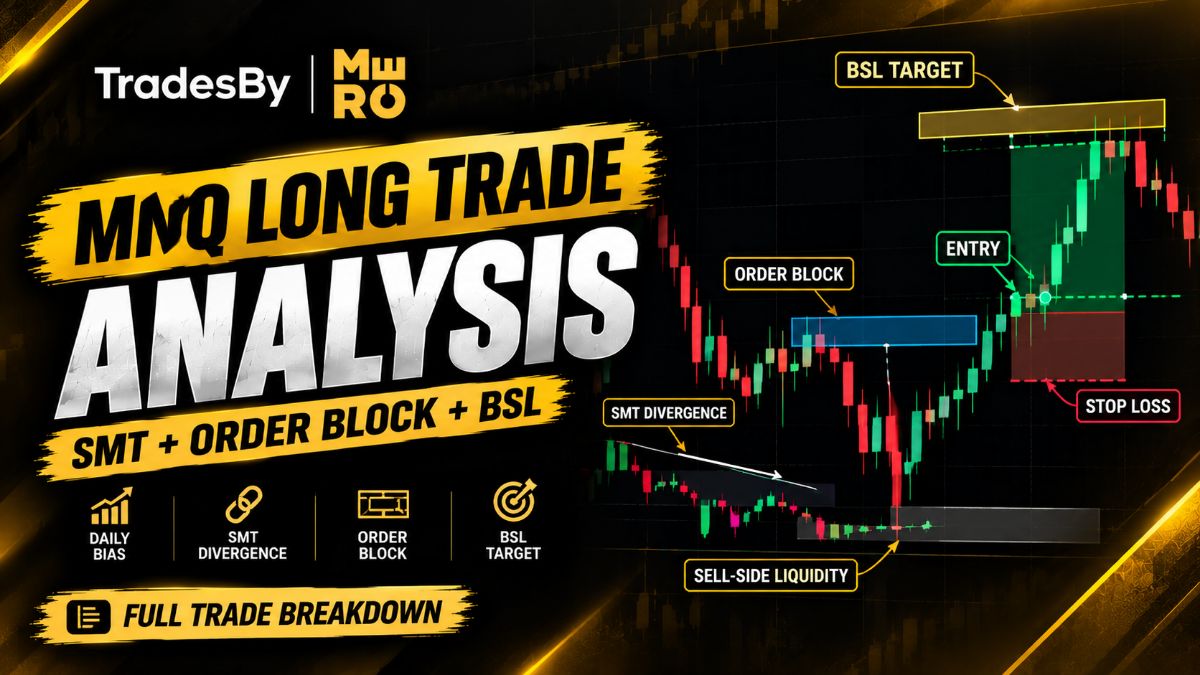
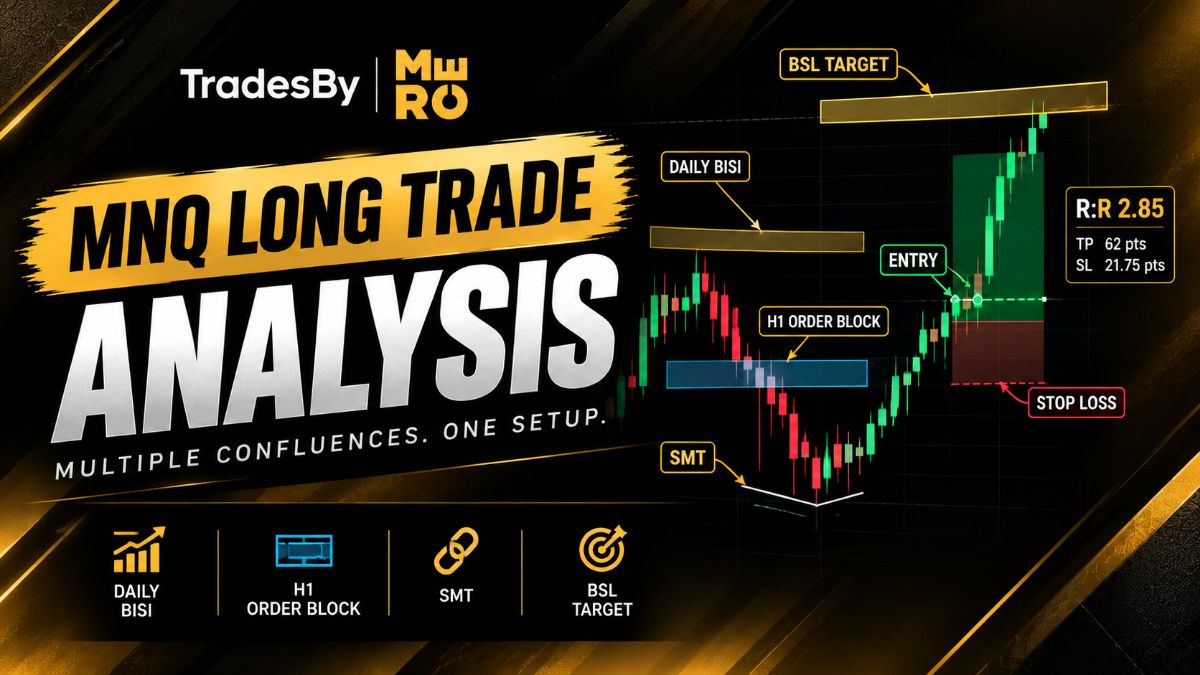
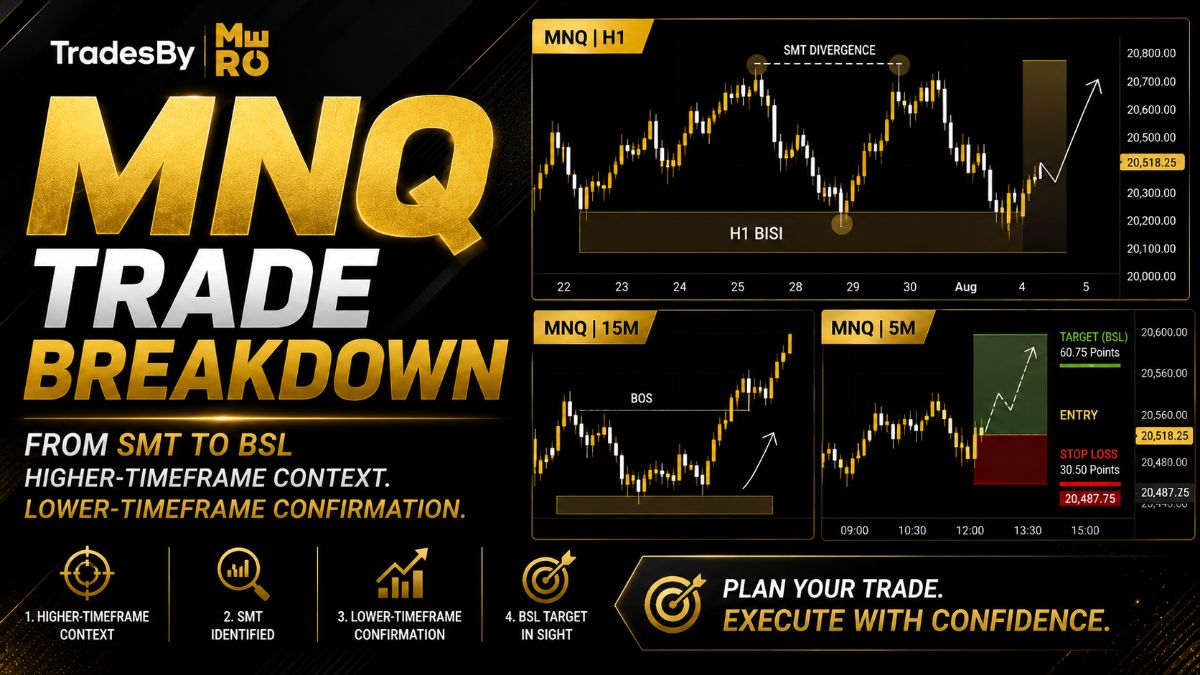
In this MNQ analysis, I walk through a long setup by combining higher-timeframe context, SMT, price reaction, lower-timeframe confirmation, and buy-side liquidity.
The first step was identifying the bigger picture and the area where I wanted to see a reaction. I was not looking to enter simply because price reached a particular level. I wanted to see how price behaved once it reached the area.
One of the important pieces of confluence was the SMT developing around the lower area of the setup.
This gave me another reason to watch for a potential bullish reaction.
From there, I moved into the lower timeframe to look for confirmation and a more precise entry. This is where the setup becomes more structured because I can define the entry, invalidation, and potential target.
The upside target was the buy-side liquidity (BSL) above the recent highs.
Instead of choosing an arbitrary price target, I wanted to understand where liquidity was resting and where price could potentially be drawn next.
The trade was therefore built around a simple idea:
Higher-timeframe context → SMT → Lower-timeframe confirmation → Long entry → BSL target
A setup becomes stronger when different pieces of information tell the same story.
SMT alone is not an entry.
A liquidity level alone is not an entry.
A reaction from an area alone is not enough.
What I want to see is confluence between the market context, liquidity, price reaction, and confirmation.
That gives me a structured reason for taking the trade instead of entering based on emotion or FOMO.
Most importantly, I want to know my invalidation and target before taking the position.
This analysis is for educational purposes only. It is not a trading signal or a guarantee of profit. Trading involves risk.
Log in to like and join the discussion.
GOLD Long Trade Analysis | SMT + Order Block + BSL
Oct 10, 2026 · 3 min read
Stalking the Judas Swing in Aussie & Kiwi – The Bearish Path
Jun 8, 2026