July 28, 2026 · 3 min read
MNQ Trade Breakdown: Waiting for Confirmation Before Entering
In this MNQ setup, the most important part was not simply identifying the possible market direction. The real focus was waiting for enough confirmation before taking the entry.
The higher timeframe gave me the initial context and helped me understand where price could potentially move. However, higher timeframe bias alone was not enough reason to enter the trade.
I still needed the lower timeframe to confirm that the setup was valid.
I started by looking at the overall market structure and the important areas where price could react.
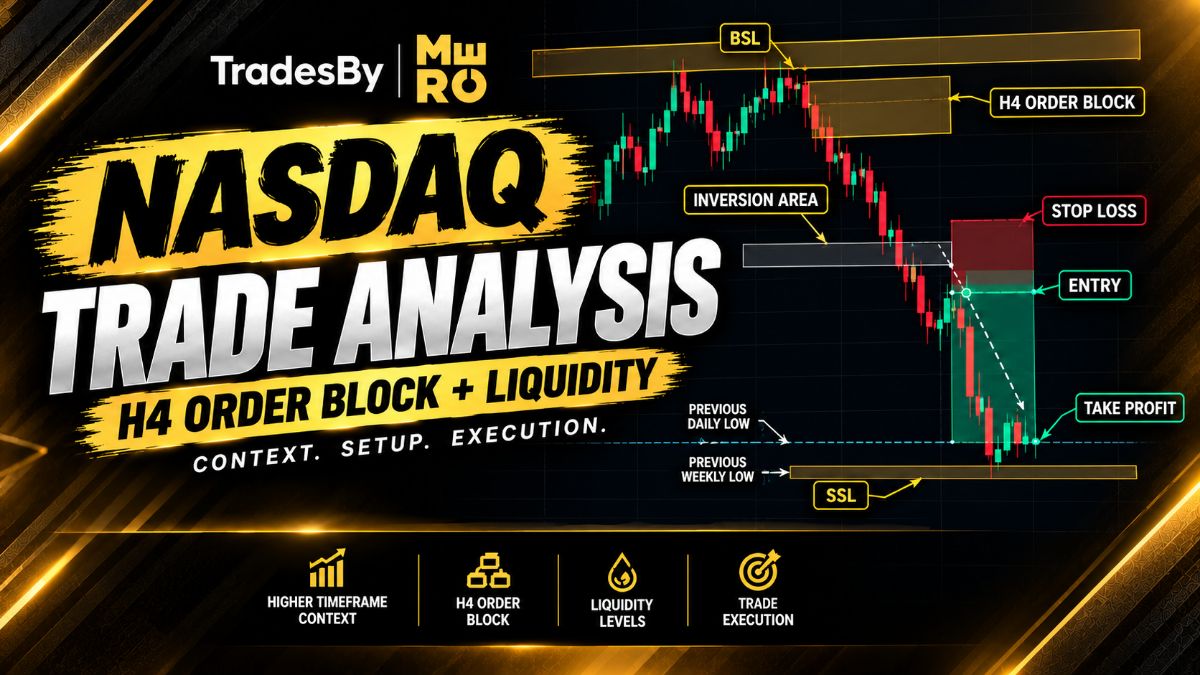
The higher timeframe helped me identify the possible bearish bias and the liquidity area that price could target. In this case, the main objective was the sell-side liquidity below the market.
This gave me a clear direction, but it did not automatically mean that I should enter a short position immediately.
A possible bias is only the first part of the analysis.
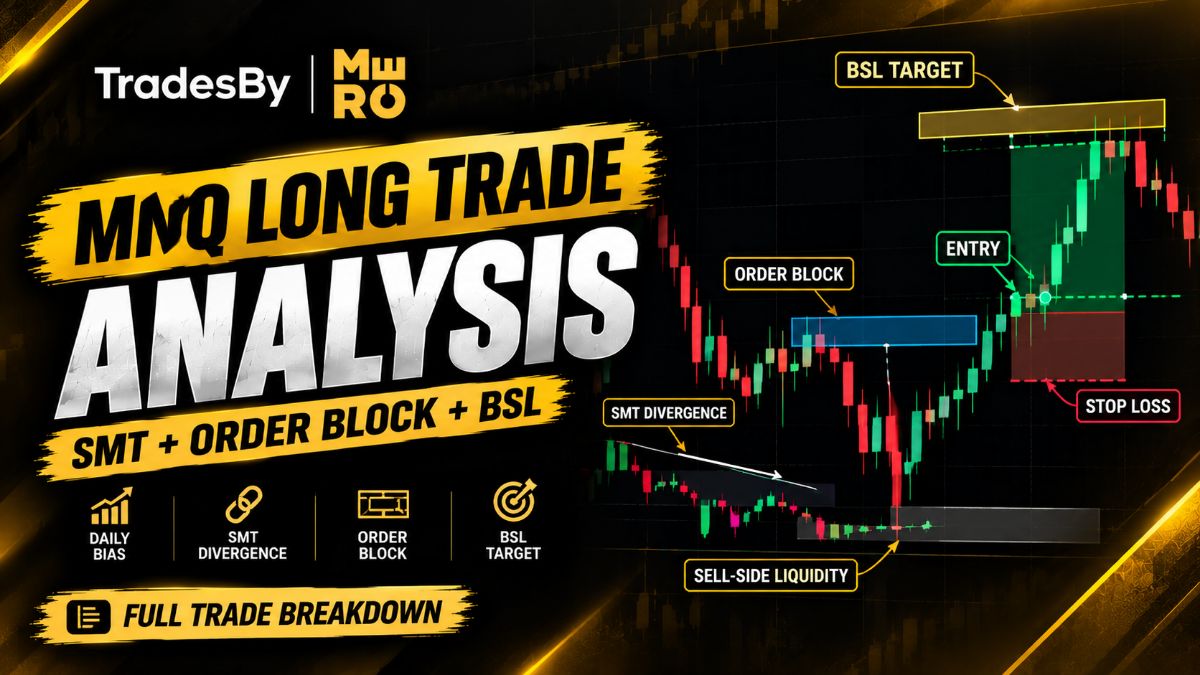
One of the confirmations I watched for was SMT divergence.
SMT helped show that the correlated markets were no longer moving in the same way. This difference can be an early sign that the current move is losing strength and that price may be preparing to reverse or continue toward another liquidity objective.
Instead of entering as soon as price reached an area of interest, I waited for this additional confirmation.
This helped reduce the chance of entering too early.
After identifying the SMT, I moved to the lower timeframe and waited for an inversion setup.
The inversion gave me a more precise entry area and showed that the market was beginning to respect the bearish idea.
This is where the higher timeframe and lower timeframe worked together.
The higher timeframe provided the possible direction.
The lower timeframe provided the actual entry confirmation.
Without the lower timeframe confirmation, the trade idea would still be incomplete.
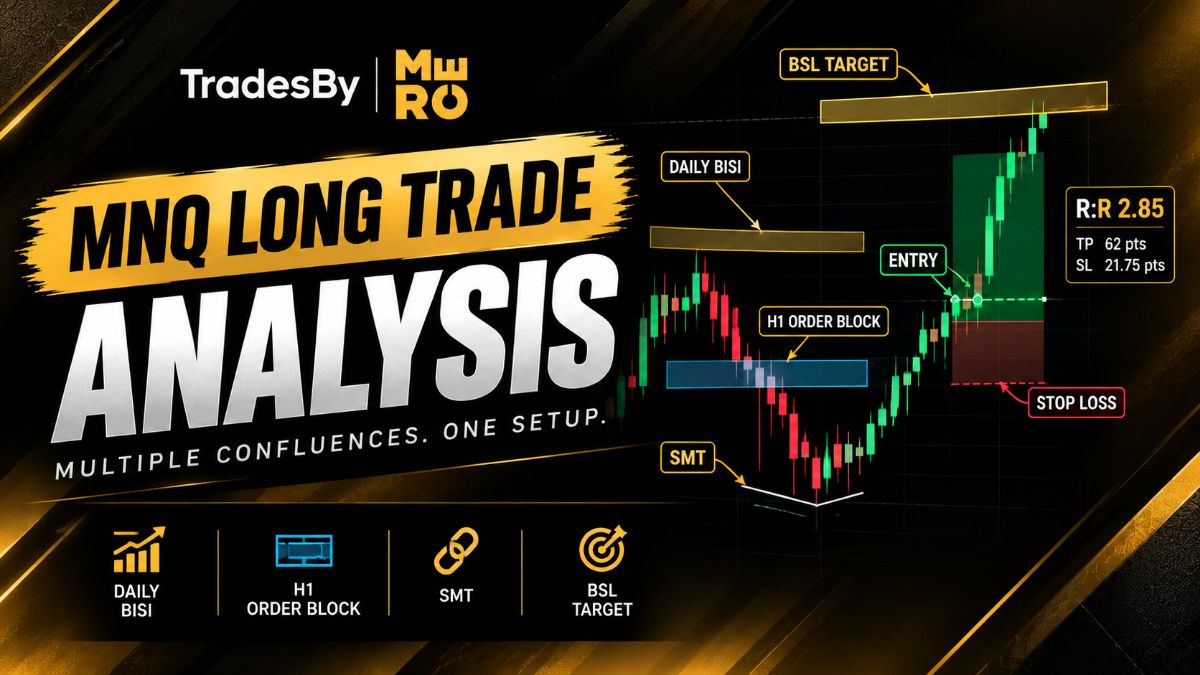
Once the inversion was confirmed, I could define the trade more clearly.
The entry was based on the lower timeframe reaction.
The stop loss was placed beyond the level that would invalidate the setup.
The target was the sell-side liquidity identified during the higher timeframe analysis.
Before entering any trade, I always want to know three things:
Where am I entering?
Where is my analysis wrong?
Where is price most likely to move next?
If those three areas are not clear, the trade is usually not ready.
The biggest lesson from this setup is that a higher timeframe bias should not be treated as an automatic entry signal.
The higher timeframe shows the possible direction, but the lower timeframe tells us whether the market is actually ready to move.
Waiting for SMT and inversion confirmation helped create a more structured entry with a clear invalidation point and liquidity target.
Good trading is not about entering every possible setup.
It is about waiting until the market gives enough evidence to support the idea.
For educational purposes only. This analysis is not a trading signal or a guarantee of profit. Trading involves risk.
Log in to like and join the discussion.
Stalking the Judas Swing in Aussie & Kiwi – The Bearish Path
Jun 8, 2026
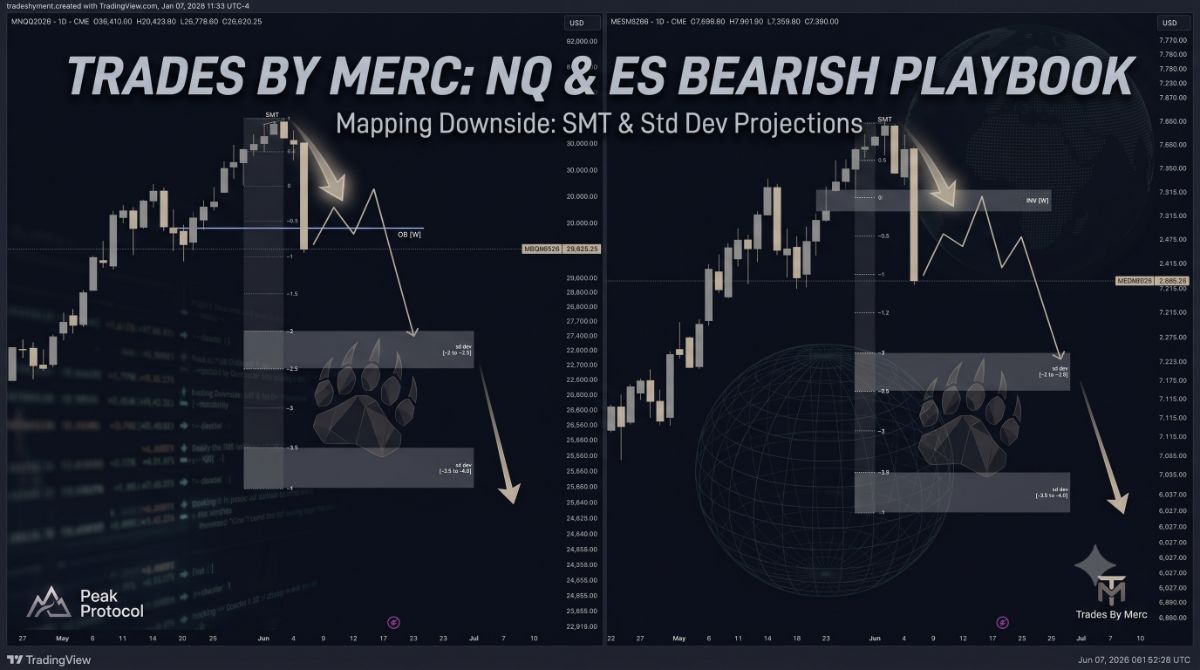
Mapping the Bearish Continuation in NQ & ES [June 8 - 12, 2026]
Jun 7, 2026
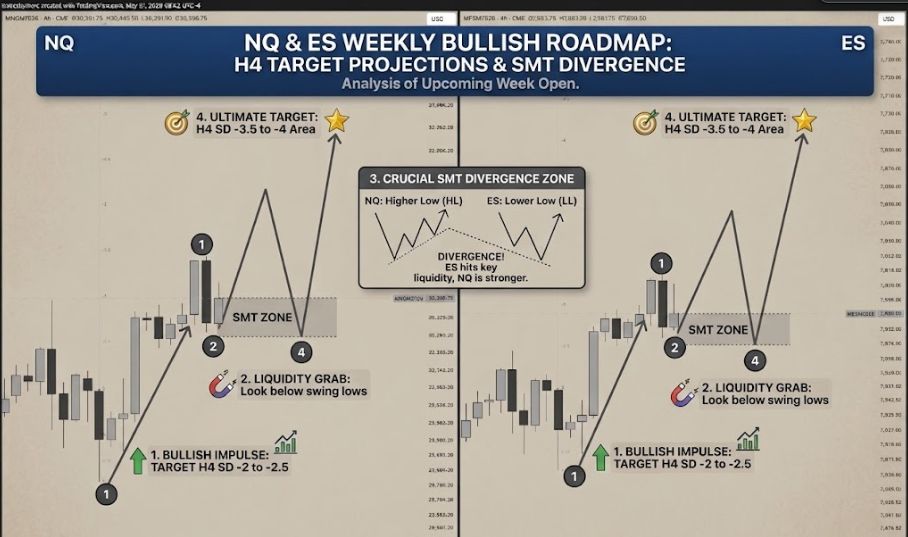
NQ & ES Weekly Bullish Roadmap
May 31, 2026
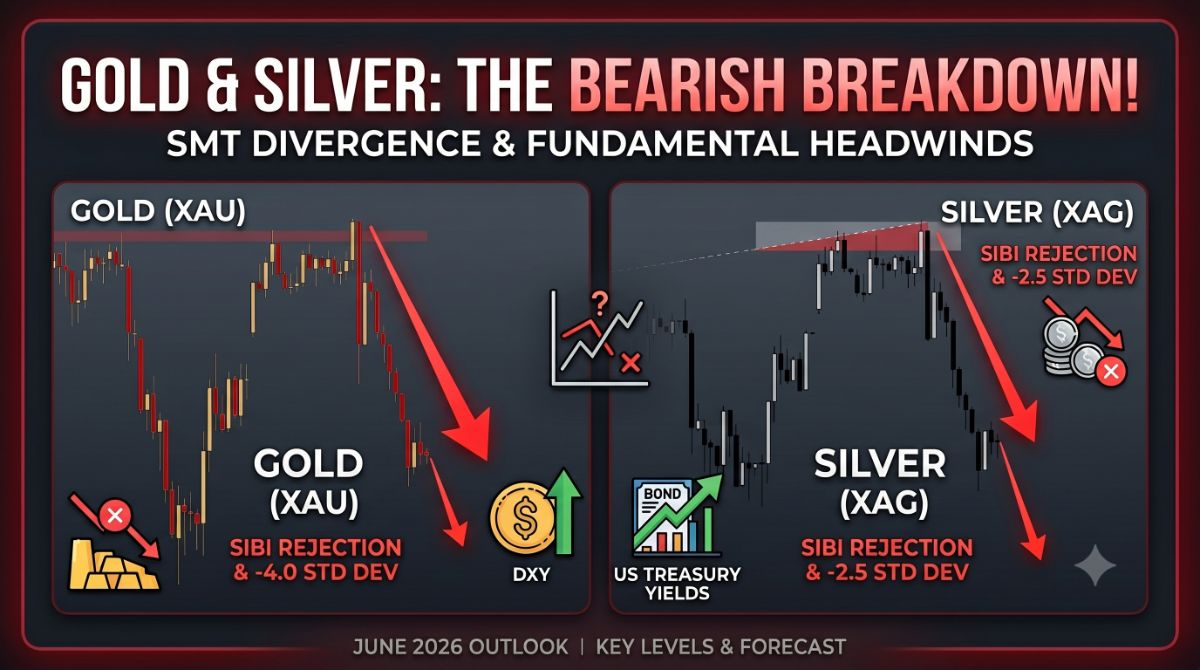
Gold & Silver Market Outlook: SMT Divergence & The Bearish Case
Jun 21, 2026
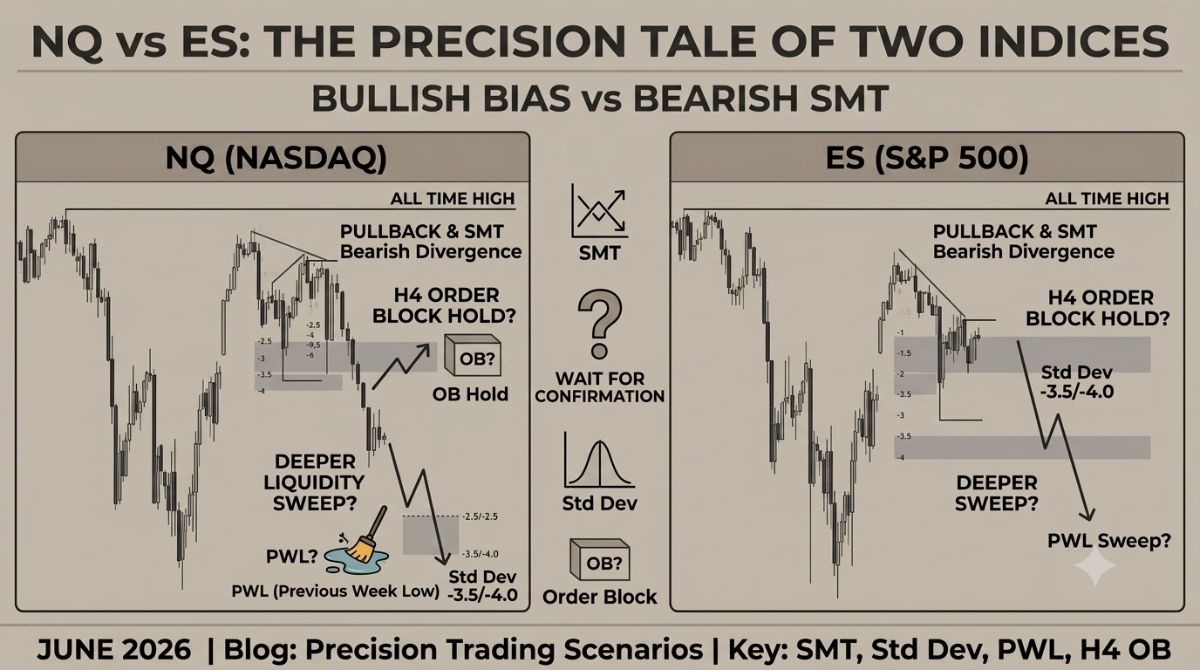
Nasdaq (NQ) vs S&P500 (ES): Precision Scenarios in a Tale of Two Indices
Jun 21, 2026