July 30, 2026 · 3 min read
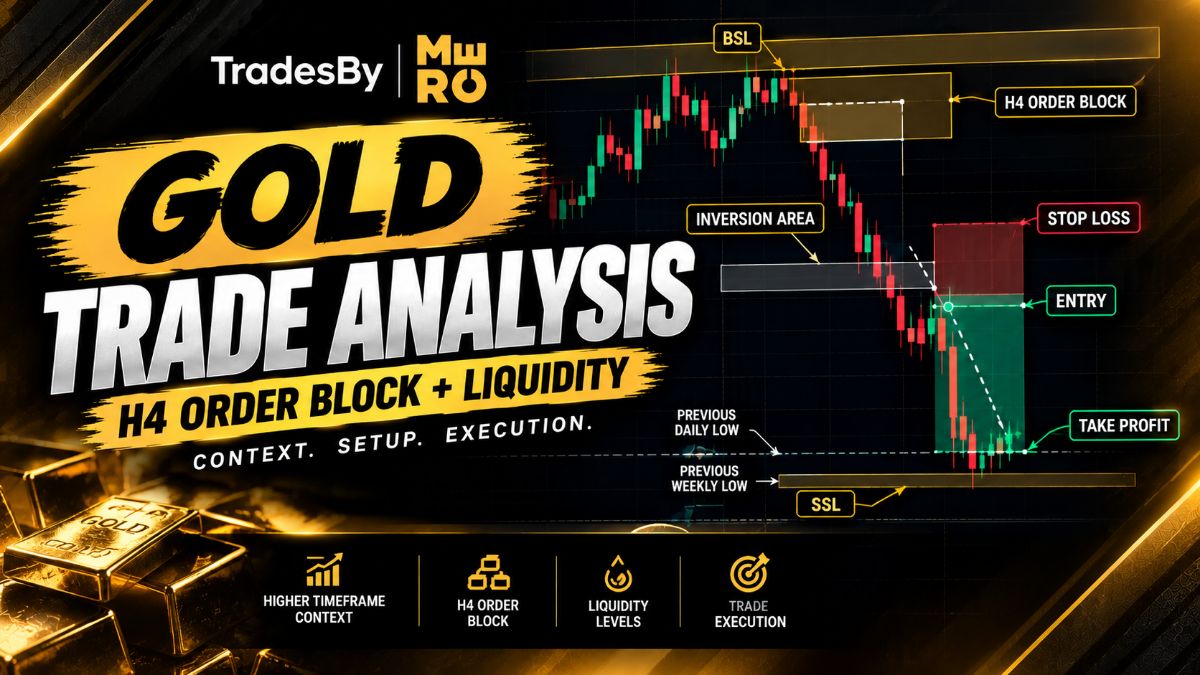
Gold was showing a possible bearish opportunity, but I did not enter based on direction alone.
The main focus of this trade was confirmation.
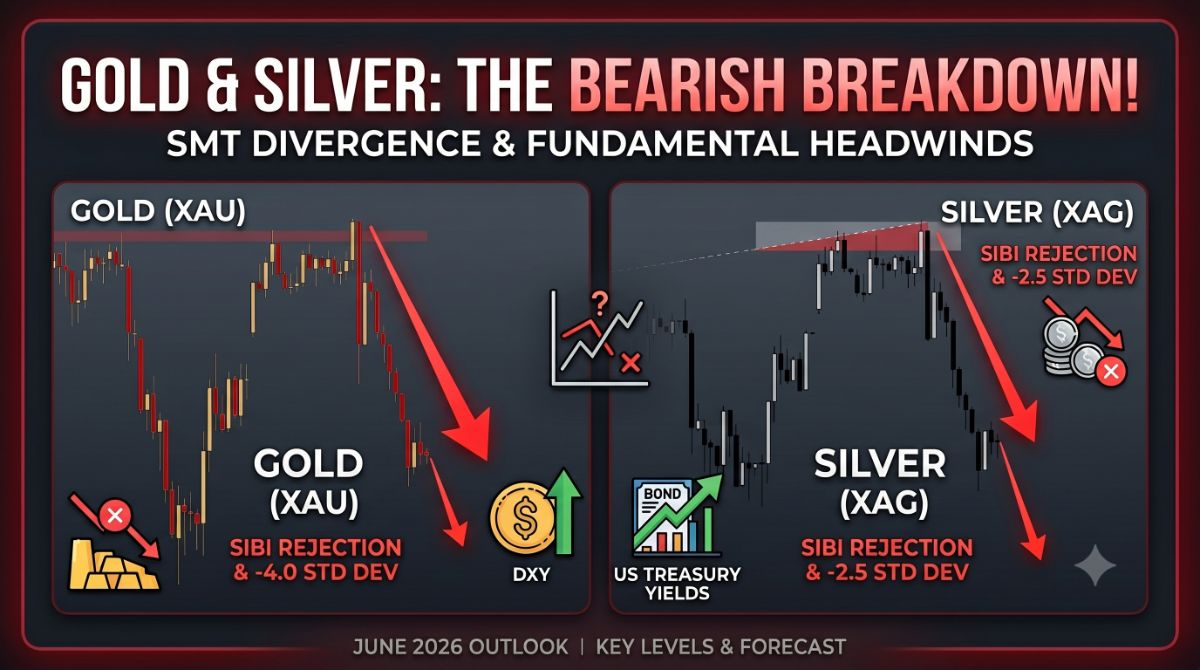
I first used the higher timeframe to understand the market context. After identifying the possible bearish bias, I compared Gold with Silver and watched for SMT divergence.
That additional confirmation helped support the idea that the move in Gold was becoming weaker and that price could continue toward liquidity below.
The higher timeframe gave me the possible direction of the trade.
It helped me identify where price was positioned and which side of the market could become the next target.
However, a higher timeframe bias is not an automatic entry.
It only gives me a reason to start watching for a setup.
Entering too early can expose the trade to unnecessary risk, especially when the lower timeframe has not yet confirmed the idea.
One of the most important parts of this analysis was the relationship between Gold and Silver.
These markets often move in a similar way. When one market creates a different structure from the other, it can provide useful information about the strength of the current move.
In this setup, SMT divergence helped confirm that the bearish idea was worth watching.
I did not use SMT as a signal by itself. I used it as another piece of evidence together with the higher timeframe context and lower timeframe price action.
After establishing the possible bias, I moved to the lower timeframe and waited.
This is where discipline becomes important.
A setup can look good on the higher timeframe, but the market may still move against the idea before the actual opportunity appears.
Instead of chasing the move, I waited for price to provide a clearer confirmation before considering the trade.
The higher timeframe gave me the possible bias.
The lower timeframe helped confirm whether the market was ready.
The trade idea was built around the possibility of price moving toward sell-side liquidity.
Liquidity gave the analysis a logical objective. It was not simply a random target or a profit amount that I wanted the market to reach.
Before taking a trade, I want to understand where price may be attracted next and what market structure supports that expectation.
This helps me avoid entering trades without a clear reason or objective.
The biggest lesson from this Gold trade is simple:
Do not enter only because you have a bias. Wait for confirmation.
A good trade idea should have several supporting factors.
In this case, the process included:
Higher timeframe context, SMT confirmation with Silver, lower timeframe confirmation, and a clear liquidity objective.
The goal is not to predict every market move.
The goal is to wait until the market provides enough evidence to justify the risk.
Join our free trading community at tradesbymerc.com for free courses, weekday webinars, complete trade analyses, and mentorship.
For educational purposes only. This analysis is not a trading signal or a guarantee of profit. Trading involves risk.
Log in to like and join the discussion.
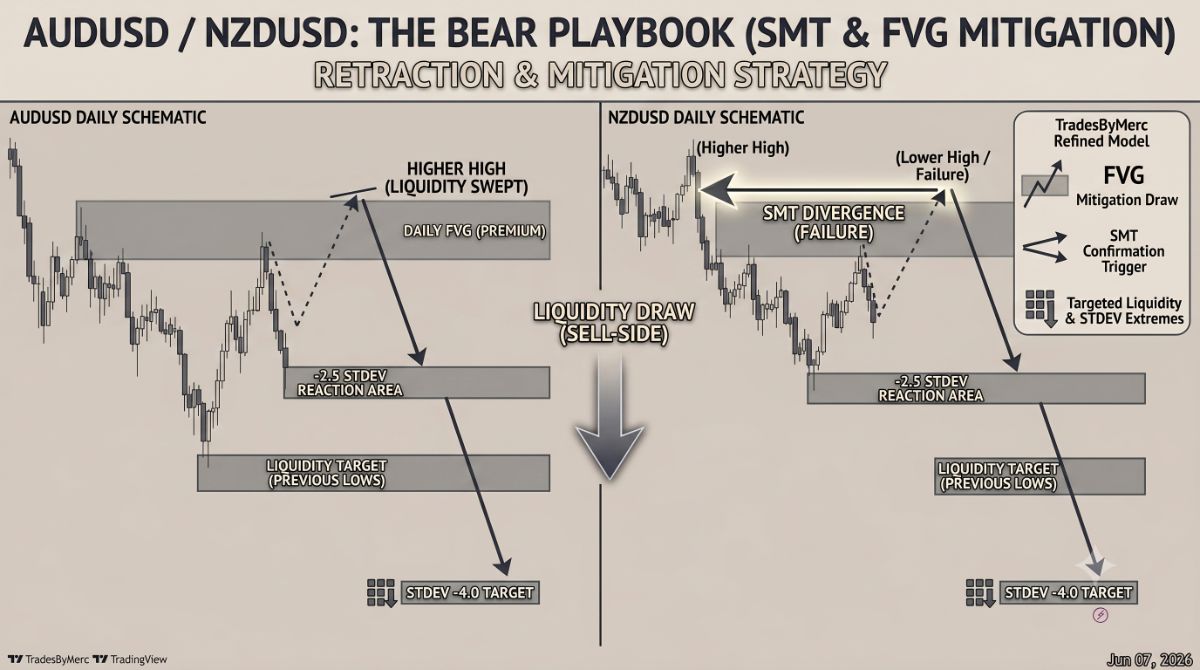
Stalking the Judas Swing in Aussie & Kiwi – The Bearish Path
Jun 8, 2026
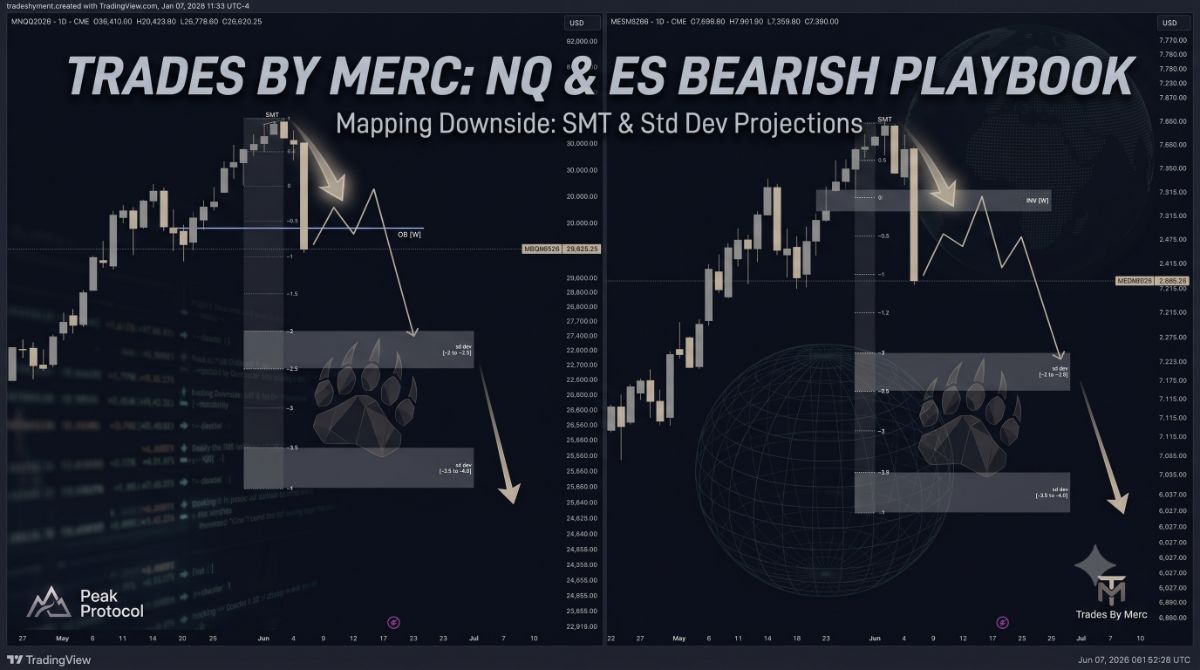
Mapping the Bearish Continuation in NQ & ES [June 8 - 12, 2026]
Jun 7, 2026
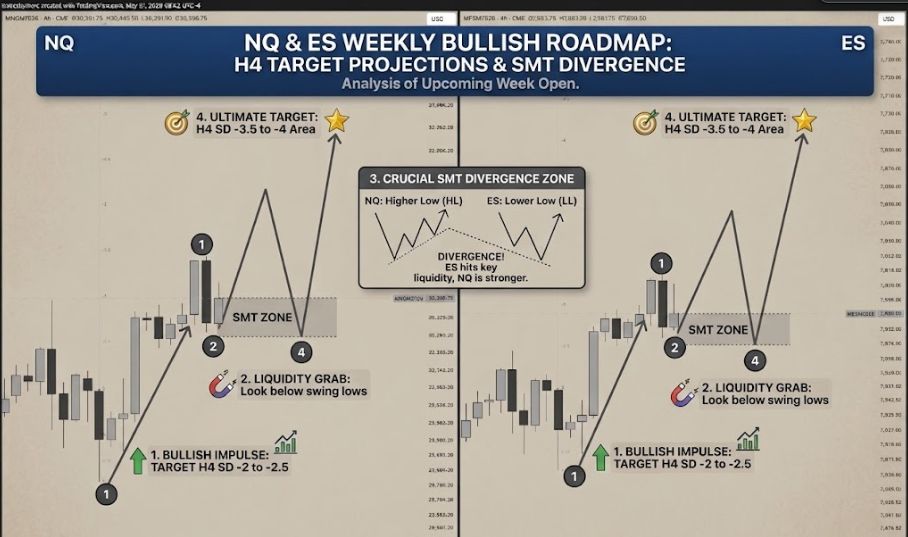
NQ & ES Weekly Bullish Roadmap
May 31, 2026
Gold & Silver Market Outlook: SMT Divergence & The Bearish Case
Jun 21, 2026
Nasdaq (NQ) vs S&P500 (ES): Precision Scenarios in a Tale of Two Indices
Jun 21, 2026